
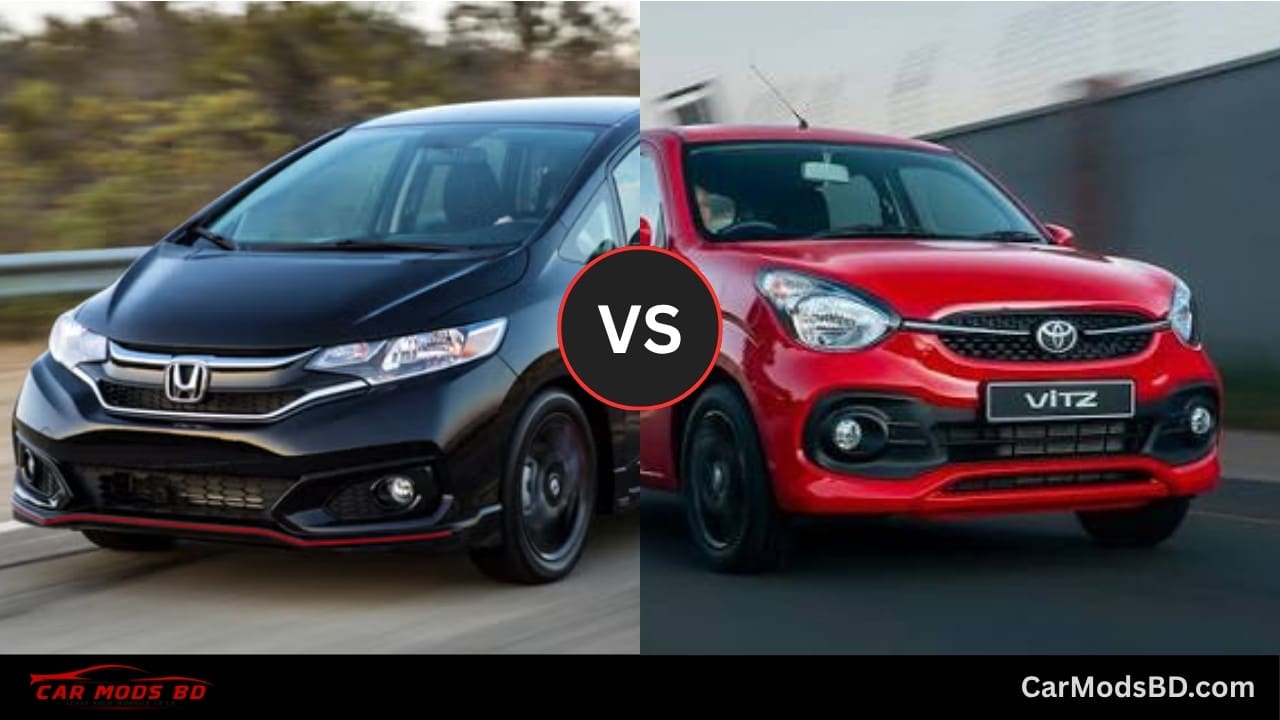
For Bangladeshi car buyers comparing imported Japanese hatchbacks, the Honda Fit and Toyota Vitz remain two of the most searched options in 2026. Both cars are compact, fuel efficient, and easy to find in the reconditioned car market, but they differ in long-term running cost, maintenance demands, and overall ownership experience. This Honda Fit vs Toyota Vitz comparison focuses on what matters most to buyers in Bangladesh: fuel economy and maintenance affordability.
The Honda Fit is recognized for its spacious cabin design and efficient use of interior space despite its small footprint. The Toyota Vitz, known in some markets as the Yaris hatchback, is recognized for its dependable engine, simple mechanical design, and strong presence in Bangladesh's used parts ecosystem. Both models are widely available as reconditioned imports and remain popular choices for first-time car owners and small families.
Fuel cost is often the deciding factor for Bangladeshi buyers, given fluctuating fuel prices and heavy city traffic.
The Honda Fit generally delivers around 16 to 18 km per liter in mixed driving conditions. Its lightweight chassis and efficient CVT transmission help it perform well in stop-and-go traffic common in Dhaka and other major cities.
The Toyota Vitz typically delivers around 15 to 17 km per liter under similar conditions. While slightly behind the Fit in pure mileage figures, the difference is small enough that real-world fuel cost savings between the two cars remain marginal for most drivers.
For buyers prioritizing fuel cost above all else, the Fit holds a slight advantage, but the Vitz remains a strong and economical choice as well.
Honda Fit maintenance is generally affordable, with parts available through Honda specialist garages and used parts markets across major cities. However, certain CVT transmission issues and electronic sensor faults can become costly if the car is not serviced regularly.
The Toyota Vitz benefits from Toyota's extensive and well established parts supply chain in Bangladesh, which is arguably the strongest among Japanese brands locally. This means lower part costs, easier sourcing, and shorter repair turnaround times in most cases. For buyers concerned about long-term maintenance ease, the Vitz often has a practical edge.
Both cars use proven Japanese engineering known for durability. The Honda Fit's engine and CVT combination performs well when maintained on schedule, while the Toyota Vitz's engine is widely regarded as one of the most reliable small engines on Bangladesh roads, often running smoothly well past 150,000 kilometers with proper care.
The Honda Fit's compact dimensions and tighter turning radius make it easier to maneuver through narrow lanes and congested intersections in cities like Dhaka and Chattogram.
The Toyota Vitz tends to offer a slightly more composed ride on highways and uneven rural roads, making it a comfortable option for longer trips between districts.
Toyota models generally hold stronger resale value in Bangladesh due to brand reputation and parts availability, and the Vitz is no exception. The Honda Fit still maintains reasonable resale demand, particularly among buyers who value its interior space and fuel efficiency, but the Vitz typically retains a slightly higher percentage of its original price over time.
Reconditioned Honda Fit and Toyota Vitz units are usually priced within a similar range in Bangladesh, depending on model year, mileage, engine size, and overall condition. Buyers should inspect the chassis, check the registration book, and verify accident history before purchasing either model from local importers.
Choose the Honda Fit if fuel efficiency and cabin space are your top priorities.
Choose the Toyota Vitz if low maintenance cost, parts availability, and resale value matter more to you.
Both the Honda Fit and Toyota Vitz are dependable choices for Bangladeshi car buyers in 2026, and the right pick depends on your driving habits and ownership priorities. If you want slightly better fuel economy and a roomier interior, the Fit is a strong option. If you prefer easier maintenance, stronger parts support, and better resale value, the Vitz is likely the smarter long-term investment for Bangladesh roads.