
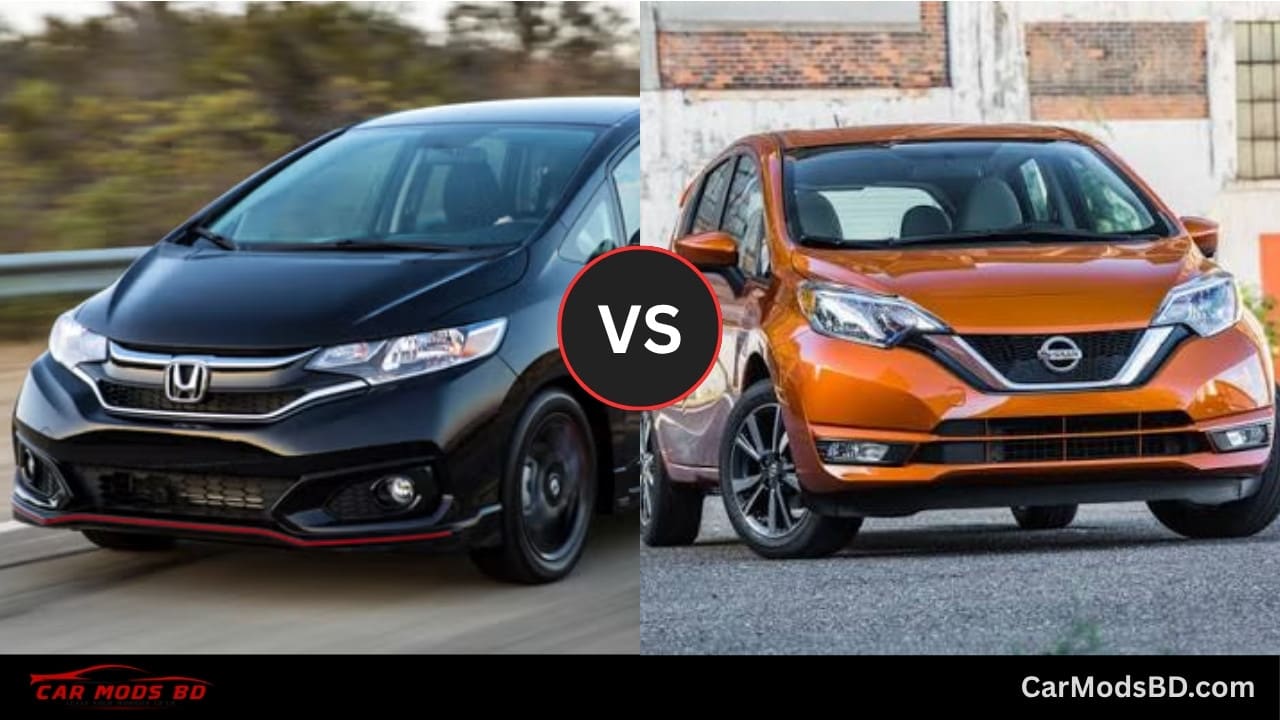
Bangladeshi car buyers comparing imported Japanese hatchbacks often weigh the Honda Fit against the Nissan Note, especially when reliability and resale value are top priorities. Both cars are popular in the reconditioned car market, offer hybrid variants, and are known for practical city driving performance. This Honda Fit vs Nissan Note comparison focuses on which model holds up better over time and which one offers stronger resale returns in Bangladesh.
The Honda Fit is well known for its flexible interior layout, efficient fuel consumption, and agile handling in tight city traffic. The Nissan Note, particularly the e-Power hybrid variant, has gained strong popularity in Bangladesh for its smooth electric-assisted drive and impressive fuel savings. Both cars are commonly imported as reconditioned units from Japan and are widely available across Dhaka, Chittagong, and other major car markets.
The Honda Fit uses Honda's well tested engine and CVT transmission combination, known for solid performance when properly maintained. Common concerns include occasional CVT wear over high mileage and sensor related issues in older units, though these are manageable with regular servicing.
The Nissan Note, especially the e-Power hybrid version, relies on a unique series hybrid system where the engine generates electricity rather than directly powering the wheels. This system is generally reliable, but hybrid battery health and inverter condition should be checked carefully before purchase, since replacement costs can be higher than standard engine repairs.
For buyers seeking simpler mechanical reliability with fewer specialized components, the Fit may feel more straightforward. For buyers wanting smoother power delivery and innovative hybrid technology, the Note offers a unique advantage.
The Honda Fit typically delivers around 16 to 18 km per liter, while the Nissan Note e-Power variant can deliver significantly higher mileage, often exceeding 20 km per liter due to its hybrid drivetrain. This makes the Note especially attractive for buyers focused on minimizing fuel expenses in daily city commuting.
Honda Fit parts are widely available in Bangladesh through established Honda parts dealers and local garages. Routine maintenance costs remain moderate, and most mechanics across the country are familiar with servicing Honda models.
Nissan Note parts, particularly for standard engine variants, are reasonably available, but e-Power hybrid components can be harder to source and more expensive to repair if issues arise. Buyers should confirm hybrid battery condition and service history before purchasing a Note in Bangladesh.
The Honda Fit maintains decent resale value in Bangladesh due to consistent demand among buyers who prioritize fuel efficiency and interior space. Its resale price tends to remain stable across model years with low mileage.
The Nissan Note, especially the e-Power version, has seen growing demand in recent years due to its outstanding fuel economy, which has helped support stronger resale prices. However, resale value can vary depending on the buyer's confidence in hybrid battery longevity, making service records an important factor.
Overall, both cars hold reasonable resale value, but the Note's hybrid efficiency often attracts a slightly more eager pool of buyers in the current Bangladesh market.
The Honda Fit offers nimble handling and a tight turning radius, making it well suited for narrow lanes and congested city streets. The Nissan Note, particularly with e-Power, delivers smooth and quiet acceleration that many drivers find comfortable in slow moving traffic.
The Nissan Note's hybrid system provides relaxed and steady highway cruising with reduced fuel consumption, while the Honda Fit remains a capable and stable highway performer with a slightly firmer ride.
Reconditioned Honda Fit units are generally priced slightly lower than Nissan Note e-Power variants, which often carry a premium due to their hybrid technology and fuel savings appeal. Standard petrol Note variants are usually priced closer to the Fit. Buyers should always verify mileage, hybrid battery health for Note units, and overall vehicle condition before finalizing a purchase.
Choose the Honda Fit if you want straightforward mechanical reliability, lower maintenance complexity, and stable resale value.
Choose the Nissan Note if you want superior fuel efficiency, a refined hybrid driving experience, and growing resale demand.
Both the Honda Fit and Nissan Note are strong contenders for Bangladeshi buyers in 2026. The Fit suits drivers who prefer mechanical simplicity and dependable long-term ownership, while the Note appeals to those chasing maximum fuel savings through hybrid technology. Your choice should depend on how much you value fuel economy versus mechanical simplicity, along with your budget for potential hybrid component maintenance down the road.