
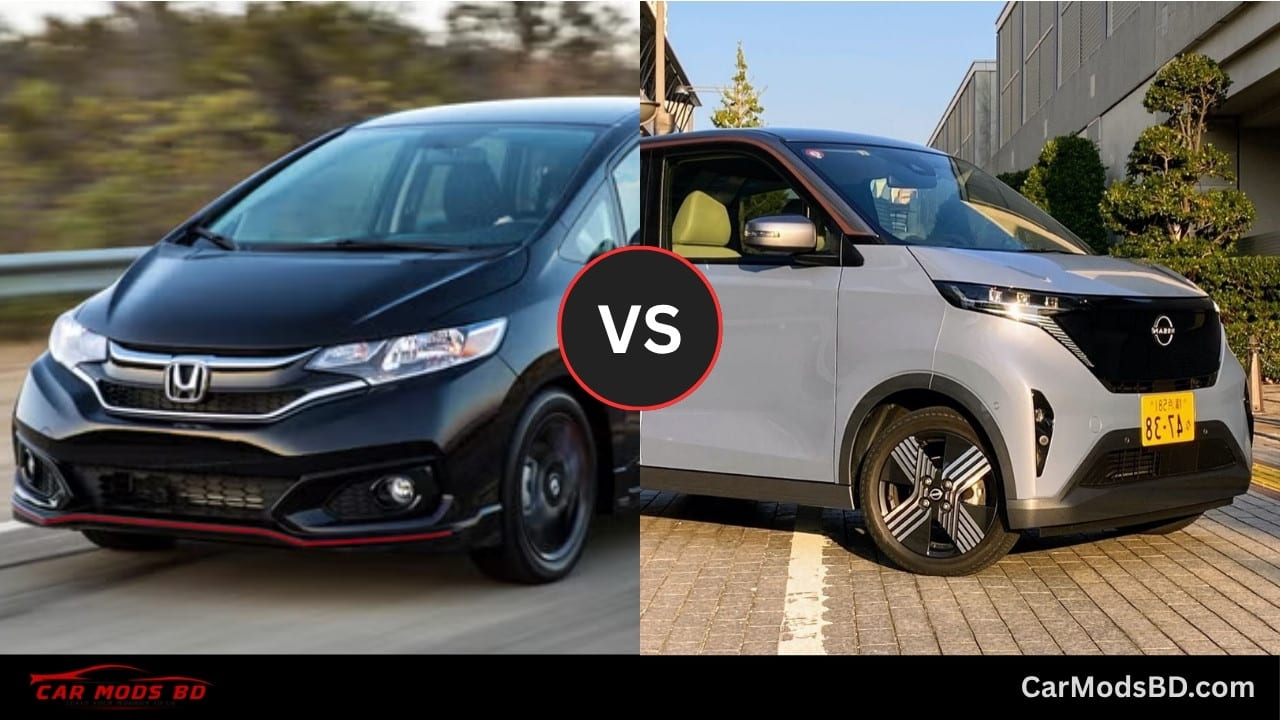
As electric vehicles gain attention among Bangladeshi car enthusiasts, two Japanese kei class EVs have entered the conversation: the Honda N-One e and the Nissan Sakura. Both are compact electric vehicles designed primarily for Japan's domestic market, but interest in importing them to Bangladesh has grown due to rising fuel prices and curiosity about EV ownership. This Honda N-One e vs Nissan Sakura comparison explores their features, practicality, and what Bangladeshi buyers should know before considering an import.
The Honda N-One e is Honda's electric version of its popular N-One kei car, built with a compact footprint, retro styling, and a focus on efficient city driving. The Nissan Sakura is Nissan's dedicated kei EV, built on similar underpinnings to the Mitsubishi eK X EV, and has become one of the best selling electric kei cars in Japan due to its smooth ride and practical range for short commutes.
Kei cars are a Japan specific vehicle category with strict size and engine limitations, designed for narrow streets and tight parking common in Japanese cities. These EVs are not originally built with right hand traffic export markets like Bangladesh in mind, and import availability can be limited compared to mainstream hatchbacks. Buyers interested in either model should research current import regulations, charging infrastructure availability, and after sales support before committing to a purchase.
The Honda N-One e is designed primarily for short distance city commuting, offering a battery range suitable for daily errands and short trips within urban areas. Its small battery pack keeps the car lightweight and efficient for stop and go traffic.
The Nissan Sakura offers a similarly modest range tailored for city driving, with Nissan emphasizing smooth and quiet acceleration thanks to its electric motor. The Sakura has generally received strong reviews in Japan for its comfortable ride quality despite its compact kei dimensions.
For Bangladesh's mostly short distance city commuting patterns, both vehicles offer sufficient range, though neither is designed for long highway journeys between districts.
One of the biggest challenges for importing either EV to Bangladesh is the current lack of widespread fast charging infrastructure outside major cities. Buyers would primarily need to rely on home charging setups, which requires stable electrical access and proper charging equipment. This is an important factor to evaluate before importing any electric kei car, regardless of brand.
The Honda N-One e offers a surprisingly roomy cabin for its small exterior footprint, with Honda's signature space efficient design. Rear seat space and cargo capacity remain limited compared to standard hatchbacks like the Honda Fit, but are reasonable for a kei class vehicle.
The Nissan Sakura also offers a practical interior layout with comfortable front seating, though similarly limited rear space due to its kei car classification. Its dashboard design and tech features are often considered slightly more modern compared to the N-One e.
Since both vehicles are relatively new to the export market, parts availability in Bangladesh remains limited compared to established models like the Honda Fit or Toyota Vitz. Battery related repairs, in particular, may require specialized service centers, which are still developing in Bangladesh's EV ecosystem. Buyers should factor in higher uncertainty around long-term maintenance for either model.
Resale value for kei EVs in Bangladesh is currently difficult to predict due to limited import volume and a small buyer pool familiar with electric kei cars. As EV adoption grows and charging infrastructure improves, resale demand could increase, but for now this remains a higher risk consideration compared to importing a conventional hatchback.
Importing either the Honda N-One e or Nissan Sakura typically involves higher landed costs compared to standard hatchbacks, partly due to battery technology and limited supply in the used export market. Buyers should consult with experienced import agents familiar with EV registration requirements in Bangladesh before proceeding.
Choose the Honda N-One e if you prefer a slightly roomier cabin and Honda's space efficient design philosophy.
Choose the Nissan Sakura if you prefer a smoother ride quality and more modern interior tech features.
Both the Honda N-One e and Nissan Sakura represent an early step into electric kei car ownership for Bangladeshi buyers, but the import market for these vehicles remains niche compared to conventional hatchbacks. If you are specifically interested in EV ownership and primarily drive short distances within city limits, either model could work, provided you plan carefully for charging access and maintenance support. For buyers seeking a more established and lower risk import option, traditional hybrid or petrol hatchbacks may still be the safer choice in 2026.