
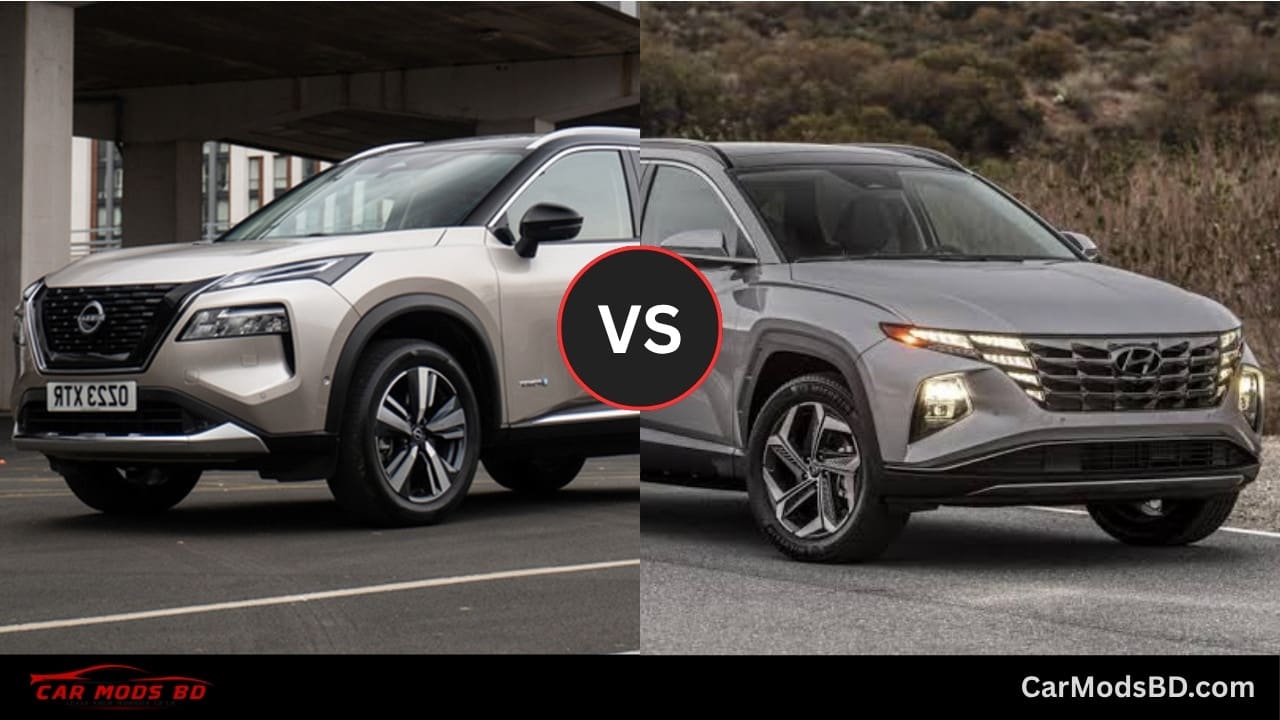
Nissan X-Trail vs Hyundai Tucson 2026: A Buyer's Guide to Comfort, Space, and Running Cost in Bangladesh
Bangladeshi buyers researching "nissan x-trail vs hyundai tucson" are usually comparing two SUVs that take different approaches to comfort and value. The X-Trail focuses on practicality and hybrid efficiency, while the Tucson leans into bold styling and a feature rich cabin. This guide breaks down comfort, space, and running cost to help buyers decide which SUV fits their needs and budget.
The X-Trail has a long standing presence in Bangladesh's reconditioned SUV market, known for its spacious interior and dependable hybrid system. The Tucson is a newer favorite among buyers who want a more modern cabin design and stronger tech features. Both are widely available as Japanese or Korean imports, so the real difference for most buyers comes down to daily comfort and long term cost.
The X-Trail offers a genuinely spacious cabin with a higher seating position, making it comfortable for families and taller passengers. Rear legroom is generous, and the boot space is practical for daily errands or longer trips outside Dhaka.
The Tucson's interior feels more modern with a sleeker dashboard layout and better fit and finish in higher trims. Front seat comfort is excellent, though rear seat space is slightly tighter compared to the X-Trail, which can matter for larger families.
The X-Trail's suspension is tuned for a softer, more forgiving ride, which works well on Bangladesh's uneven roads and frequent potholes. The Tucson offers a firmer ride that feels more planted at higher speeds on highways but can transmit more road imperfections into the cabin during city driving.
The X-Trail's e-Power hybrid system delivers smooth power and reasonable city fuel economy, which is useful given Dhaka's frequent stop start traffic. Conventional petrol variants are also common and easier to maintain long term.
The Tucson offers competitive fuel efficiency in its petrol and hybrid variants, with performance that holds up well on both city roads and highway drives. Actual mileage depends heavily on engine variant and the condition of the specific import unit.
Nissan has an established service network in Bangladesh, making parts and routine maintenance relatively accessible. Hybrid specific components may take slightly longer to source but are generally manageable.
Hyundai parts availability has grown steadily in Bangladesh, with a decent number of garages familiar with Korean vehicles. However, certain tech heavy components, such as sensors and infotainment parts, can be costlier to replace compared to the X-Trail's simpler setup.
The X-Trail tends to hold stable resale value due to strong brand recognition and steady demand from family buyers. The Tucson has been gaining popularity, particularly among younger buyers drawn to its design, which is gradually improving its resale demand, though it still trails behind more established SUVs in the local market.
The Tucson generally offers a more feature rich cabin, including a larger touchscreen, additional driver assistance features, and a more premium interior finish in higher trims. The X-Trail focuses more on functional comfort and space rather than tech heavy features, which appeals to buyers who prioritize practicality over gadgets.
For buyers who prioritize interior space, a comfortable ride on rough roads, and easier long term maintenance, the Nissan X-Trail is the more practical choice. For buyers who want modern styling, richer tech features, and a firmer highway focused ride, the Hyundai Tucson is worth the trade off.
Both the Nissan X-Trail and Hyundai Tucson offer strong value for Bangladeshi buyers, but they cater to different priorities. The X-Trail wins on space, comfort, and maintenance ease, while the Tucson stands out for its modern design and feature set. Buyers should test drive both, consider their typical driving conditions, and inspect the specific import unit's condition and history before making a final decision.